
They are evaluating realignment of warehouses and supply chains, besides exploring locations to set up hubs and shutting down some distribution centres

The Central Board of Direct Taxes has asked field officers to augment tax collections by ensuring that sectors growing at faster rates compensate for those growing slower.

Household consumption recovered in urban India in May-July but remains weak in rural.

The biggest bounce is in the realty sector, where the industry index jumped 80%. There's been a turnaround also in automobiles and ancillaries (up 45%). The pharma and health care indices have a welcome return of roughly 35%.
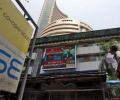
Among major gainers, Vedanta rose the most by 6.55 per cent, snapping its five-day losing streak.
Target prices around Rs 400 suggest a significant upside.

ITC's net profit grew the fastest, followed by HUL and Asian Paints.
A hotel in 1975, entry into paperboards in 1979, India's dominant cigarette maker, ITC, read the tea - or tobacco - leaves early, leveraged its enterprise strengths and stepped up the diversification agenda to create multiple drivers of growth. Some failed, some faltered, some were transformational, adding steadily to the top line. Now those efforts are making a difference: margins from non-cigarettes - FMCG, hotels, agri, paperboards, paper and packaging - are expanding and profits are kicking in more significantly than ever before.

Growth numbers for the large players in the sector, though, improved during the quarter.
Income Tax department on Monday began searches at the premises of FMCG company Vicco Laboratories in Mumbai, Nagpur and Goa for alleged tax evasion.
ITC Ltd on Friday reported a 23.09 per cent increase in consolidated net profit at Rs 5,070.09 crore for the third quarter ended December 2022, helped by growth momentum across its operating segments. The diversified company had posted a net profit of Rs 4,118.80 crore during the October-December quarter of the previous fiscal, ITC said in a regulatory filing. Its revenue from operations was up 3.56 per cent to Rs 19,020.65 crore during the quarter under review, as against Rs 18,365.80 crore in the corresponding period of the previous fiscal.

The issue of pollution caused due to the non-degradable material is keeping consumer goods majors - from ITC and Dabur to Nestl and PepsiCo - on their toes.

The stock has gained over 10 per cent in the last month but it could still have an upside, with valuations between Rs 5,200 and Rs 5,700 from several analysts and strong 'buy' consensus.

Operating margins have been the primary driver of corporate earnings in India in recent quarters, despite revenue growth suffering from weak consumer demand. Companies across sectors have reported a sharp improvement in earnings before interest, tax, depreciation, and amortisation (Ebitda) margins over the past two years, benefiting from lower commodity and energy prices. Higher margins more than compensated for slower revenue growth, resulting in double-digit growth in net profit for five consecutive quarters.

While Emami is still struggling to push growth, given weak rural demand, the sale of the group's stake in AMRI Hospitals should ease investor concerns about stake pledges by promoters. It has also carried a series of stake acquisitions which should enable the expansion of its brand portfolio. The Q2 results are likely to see flat volumes and low revenue growth alongside some gross margin expansion.
Given the expectations of growth in the packaged foods segment, the company seeks to become a Rs 1-trillion FMCG business by FY30.

The GST Council, headed by Finance Minister Nirmala Sitharaman and comprising representatives of all states and Union territories, will have its 37th meeting in Goa against the backdrop of economic growth hitting a six-year low of 5 per cent in the first quarter of the current fiscal.

Diversified entity ITC Ltd on Thursday reported a 22.66 per cent rise in consolidated net profit at Rs 5,225.02 crore in the fourth quarter ended March 2023, led by a strong growth momentum across operating segments. The company had posted a net profit of Rs 4,259.68 crore a year ago, ITC Ltd said in a regulatory filing. Its revenue from operations increased 7 per cent to Rs 18,799.18 crore in the period under review against Rs 17,754.02 crore in the year-ago period.

Ninety-nine companies, which also include some unlisted ones, have more than Rs 100 crore each of minimum alternate tax credit on their books, cumulatively adding up to Rs 75,000 crore. By utilising MAT credit, many companies will be able to bring down their effective tax cost.

From the Sensex pack, HDFC, HDFC Bank, Mahindra & Mahindra, UltraTech Cement, Tata Steel, Bajaj Finance, State Bank of India, Reliance Industries, Bajaj Finserv and ICICI Bank were the major gainers. Power Grid, Maruti, Tech Mahindra, IndusInd Bank, HCL Technologies and Axis Bank were among the laggards.

'We went from zero to about 10 million users in three months. Paytm came out with the wallet play and we came out with the UPI play.'
The government's focus on road, rail and power development will indirectly benefit the FMCG industry in the long run.

The cigarettes segment had a revenue of Rs 4,554.21 crore during the second quarter of the current fiscal, as against Rs 8,528.47 crore in the year-ago period, down 46.56 per cent.

Info Edge (India) reported a good fourth quarter for the 2022-23 financial year (Q4FY23) given depressed conditions in the Key IT segment. The billing growth of 13.7 per cent year-on-year (YoY) in recruitment was well ahead of market expectations. There was solid growth in realisations (up 5.5 per cent) as well as unique customers (up 7.7 per cent).

Sensex in green in afternoon trade.

Adani Wilmar Ltd (AWL) on Tuesday announced the acquisition of several brands, including the renowned 'Kohinoor' brand from McCormick Switzerland GMBH to strengthen its leadership in food business. The deal size was not disclosed. The acquisition would give AWL exclusive rights over the brand 'Kohinoor' basmati rice along with 'Ready to Cook', 'Ready to Eat' curries and meals portfolio under the Kohinoor brand umbrella in India, the company said in a statement.

Equity benchmarks shrugged off lacklustre global cues to clock smart gains on Tuesday, buoyed by strong buying interest in index heavyweights Reliance Industries and HDFC twins. However, a depreciating rupee and unabated foreign fund outflows capped the gains, traders said. The 30-share BSE Sensex rallied 562.75 points or 0.94 per cent to settle at 60,655.72.

At an aggregate level, the late ace investor's portfolio that was valued at Rs 32,445 crore as on March 31, 2023 is now worth Rs 35,979 crore.
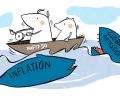
'...over the long-term can be done only by investing in equities.' 'And during weak macros, one needs t1o allocate more than drawing it down, because they offer the best entry point.'

The headline for corporate profit growth has been very encouraging in the July-September quarter (Q2) of 2023-24 (FY24), with the combined net profit of listed companies up by 38 per cent year-on-year. However, the earnings distribution has been very lopsided, with most of the growth coming from public-sector oil-marketing companies (OMCs), banks, non-bank lenders, automobile (auto) companies, and cement producers. By comparison, companies from information technology services, fast-moving consumer goods (FMCG), retail, and consumer durables were disappointed, experiencing a sharp slowdown in net sales growth and a relatively muted increase in reported net profit.

Weak enforcement results in Rs 15,000-cr of imitations sold annually.

FDI is a major driver of economic growth and a source of non-debt finance for the economic development of the country. The government has put in place an investor-friendly policy on FDI, under which investment up to 100 per cent is permitted on the automatic route in most sectors/ activities. At $ 64.37 billion, FDI in 2018-19 is the highest ever investment received for any financial year.

Indices across Indian equity markets have edged towards new record highs before undergoing a small correction in the past few sessions. The National Stock Exchange Nifty has gained 20 per cent in the past year; mid-caps (up 33 per cent), small-caps (up 31 per cent), and micro-caps (up 44 per cent) have done better. Several factors have precipitated this rally.

Ramdev's company remains a dominant player in the naturals space, but products of rivals are also gaining popularity.

India's equity markets are on a roller-coaster ride, after delivering spectacular returns for two consecutive years - in 2020 and 2021. The benchmark National Stock Exchange's (NSE's) Nifty50 is down 1.5 per cent in the first nine months of the current calendar year 2022 (CY22) as foreign portfolio investors sold Indian stocks due to rising bond yields in the US and across global markets, including India. The sell-off in the Indian equity markets has, however, not been broad-based and largely limited to sectors facing earnings headwinds from rising interest rates, lower commodity and energy prices, and likely economic recession in advanced economies.

The third-quarter financials didn't excite market watchers. But equity investors can still make money if they invest in the right stocks.

Analysts suggest making separate firms of tobacco, hotels and FMCG divisions

10 high dividend paying stocks across sectors that are expected to maintain or even increase their pay-outs in FY23 thanks to faster earnings growth in the last four quarters.

'We are certainly open to inorganic opportunities to grow.'

After the hit of the pandemic, India Inc is now worried about the adverse impact of inflation and higher commodity prices on their revenues and margins. The inflation scare is the strongest among manufacturers of consumer goods such as automobiles, consumer durables, and fast-moving capital goods (FMCG). Companies across sectors fear they will not be able to pass on the hike in input costs to their consumers due to weak demand, which, in turn, would lead to a hit on margins and profitability in the forthcoming quarters.
